2025 Impact and Finance Report

In our commitment to transparency about our work in the Democratic Republic of Congo (DRC), we are proud to publish the 2025 Impact and Financial Report, available here. Starting with a foreword (below) from the FCA Executive Director, Bandi Mbubi, the annual report offers a transparent account of both progress and ongoing challenges, detailed through case studies of the work our local team has done over the past year, in close collaboration with our local and international partners.
Reflecting on 2025: FCA’s Official Impact and Finance Report
In a year defined by disruption and determination, the Fair Cobalt Alliance demonstrated something important: that a well-rooted organisation can weather significant storms without losing sight of what it is here to do. The loss of USAID funding, awarded at the end of 2024 and withdrawn shortly after, created real uncertainty – for our team, our planning, and our partners. It was a serious setback. And yet, the FCA did not stand still.
That resilience was made possible by our members – companies and civil society organisations across the cobalt supply chain – who held the alliance steady through the transition and ensured continuity of our work in Lualaba. It was also carried by an exceptional team on the ground, whose commitment to showing up – week after week, at the Kamilombe mine site – reflects the kind of sustained engagement that this work demands.
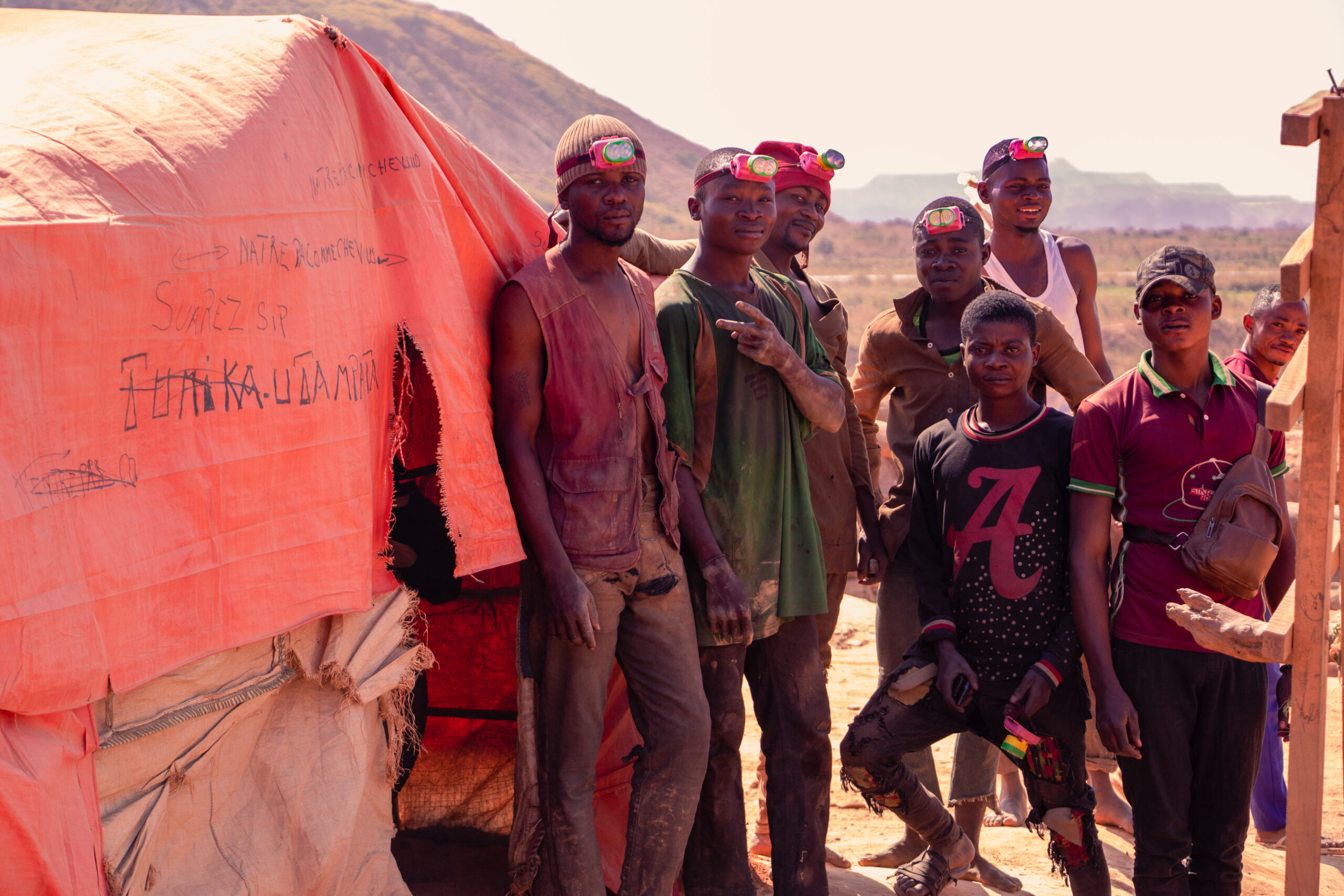
Between 150,000 and 250,000 people work in the DRC’s artisanal cobalt sector, contributing up to 2% of the country’s cobalt output. This is significant, as the DRC accounted for 73.9% of global cobalt production in 2024 (Cobalt Institute)
Delivering on our four workstreams
Despite the headwinds, 2025 was a year of tangible delivery across all four of our workstreams. Our 100 safety captains conducted 46 toolbox training sessions, reaching nearly 5,000 miners on topics from cholera prevention to tunnel risk management. A solar kit was installed at Kamilombe to help miners charge headlamps underground – reducing a daily hazard that had long been overlooked. Women washers received protective gloves and, for the first time, a dedicated changing facility: a concrete step toward dignity in a difficult working environment.
The Child Rights Action Hub DRC continued to grow in both scale and depth. In 2025, 52 additional children were enrolled in the remediation programme, bringing the cumulative total to 95 children supported. Every child enrolled passed their end-of-year exams. The Sibling Education Fund, piloted in 2024, was expanded significantly – enabling 113 siblings of children in remediation to return to school. The launch of the first Youth Club, bringing children and parents together in community, was a milestone that reflects the programme’s evolution toward a truly holistic model of support.
Our Voluntary Savings and Loan Associations (VSLA) continued their steady, transformative work. With 27 groups and over 600 active members, participants saved over USD 180,000 in 2025 and created 76 new income-generating activities. Behind these numbers are people like Julien, who rebuilt his business and kept his children in school, and Tatiana, who turned a single sewing machine into a community workshop – stories that remind us why economic resilience is not a secondary concern but a foundation for everything else we are trying to achieve.
The Responsible Mineral Credits mechanism continued to generate site-level improvements, with over USD 34,000 in credits purchased in 2025 and reinvested directly at Kamilombe. New worker representatives were elected to the Fund Allocation Committee, reinforcing the principle that the people most affected by mining conditions should have a voice in how improvement funds are deployed.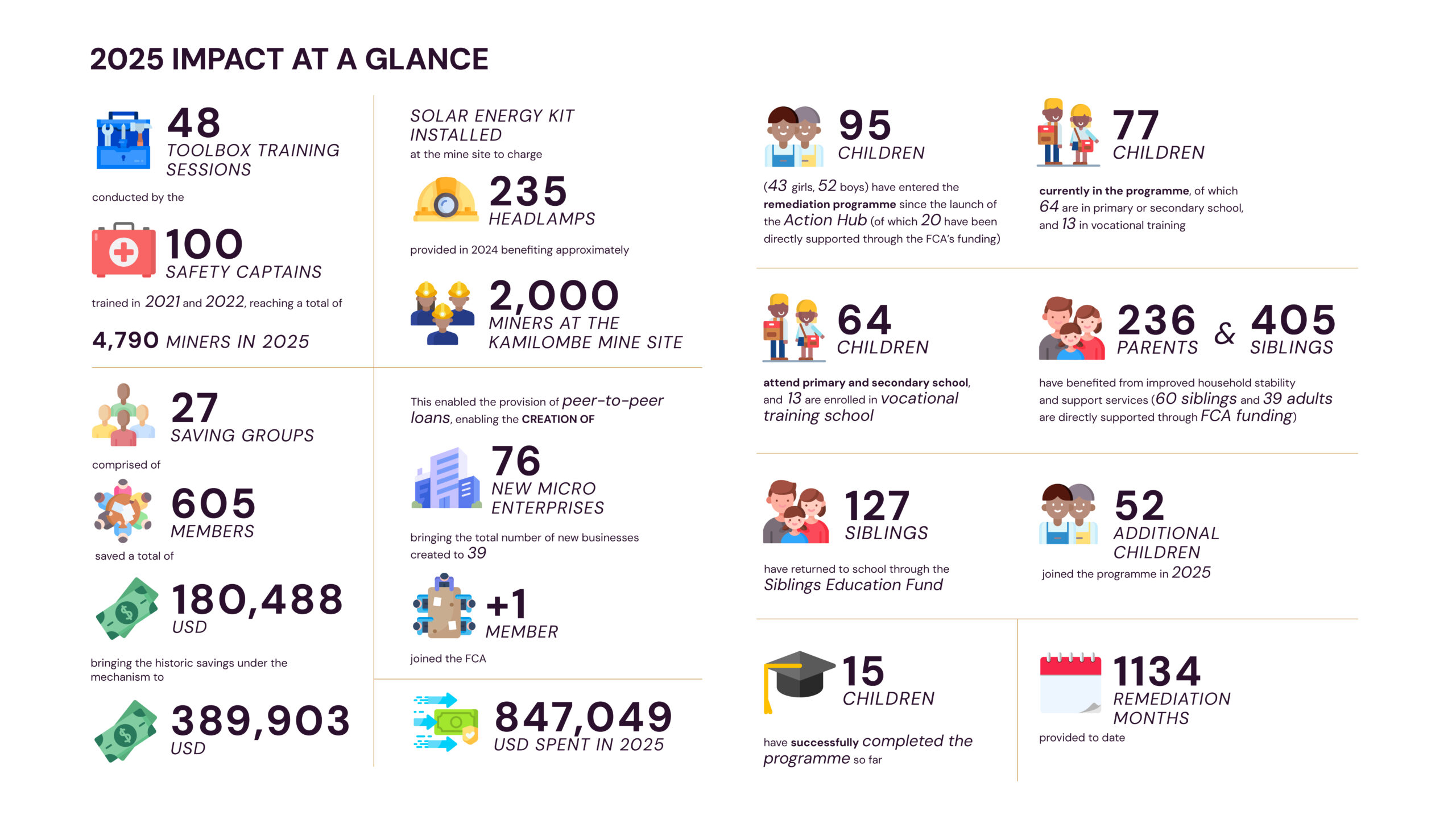
An evolving sector – and our role within it
2025 was also a pivotal year for the artisanal cobalt sector more broadly. The DRC government introduced significant regulatory reforms: 64 new artisanal mining zones were announced in Lualaba Province, an export quota system replaced the previous moratorium on raw cobalt, and the Entreprise Générale du Cobalt produced its first 1,000 tonnes of traceable artisanal cobalt. These are complex, transitional developments – but they point in a direction that aligns with what the FCA has been working toward: a formalised, professionalised ASM sector that better protects the people within it.
Within this evolving landscape, we continued to deepen our partnerships with EGC, SAEMAPE, CEEC, and local cooperatives – working toward formalisation that translates into real improvements for workers and communities, not just regulatory compliance on paper.
Looking ahead with confidence
We are pleased to share that 2025 ended on a more positive note than it began. We closed the year with a new opportunity secured: a grant as a subgrantee within a larger consortium led by World Vision, funded by the U.S. Department of Labour. This matters because it provides the continuity that meaningful, community-level change requires. The work of transforming artisanal mining cannot happen in bursts; it needs consistent, patient presence over time.
As we enter 2026, the FCA does so with stable leadership, a committed membership, and a clearer sense of where to focus. There is still a great deal to build – on health and safety, on cooperative structures, on child labour remediation, on systems that more effectively protect workers. We do not shy away from that. It is precisely why this alliance exists.
We extend our deepest thanks to our members, implementing partners, donors, and the communities in Lualaba who continue to work alongside us. This report is a record of what that collective commitment made possible in 2025 – and a foundation for what we intend to build together in the year ahead.
Bandi Mbubi,
FCA Executive Director
Related Blogs
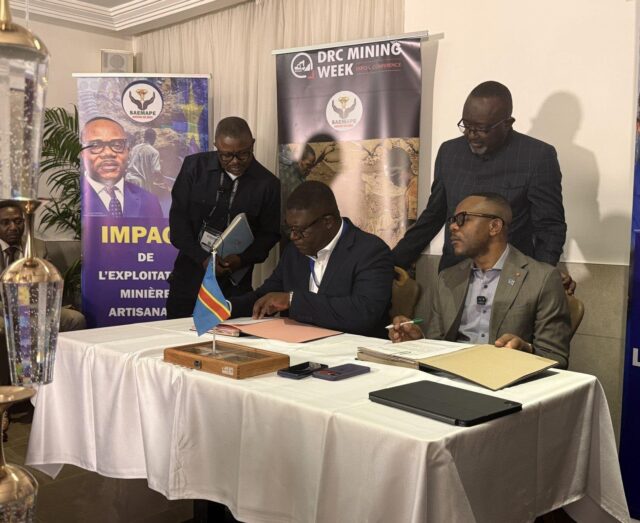
FCA and SAEMAPE sign five-year agreement to strengthen ASM formalisation in the DRC
The Fair Cobalt Alliance was delighted to sign a Memorandum of Understanding with SAEMAPE, the DRC government agency responsible for assisting and supervising artisanal and small-scale mining, at DRC Mining Week 2026 in Lubumbashi. The MoU was sealed by Jean-Paul Kapongo Kadiobo, Director General of SAEMAPE, and our Executive Director, Bandi Mbubi. The agreement runs […]
Join us at the 2026 DRC Mining Week: Expo & Conference
DRC Mining Week is the premier conference and exhibition for Africa’s mining sector, bringing together industry leaders and innovators to explore essential trends, technologies, and strategies. This exclusive platform offers insights into sustainability and digital transformation while facilitating valuable networking and partnerships. By connecting Africa with global expertise, DRC Mining Week drives sustainable progress and […]
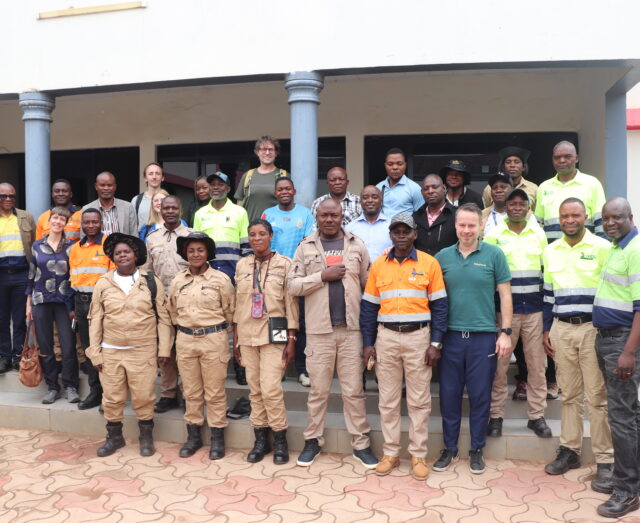
EPRM, Fairphone, and the European Commission multi-day visit to FCA’s partner mine site in the DRC
In February, we hosted a delegation of partners from the European Partnership for Responsible Minerals (EPRM), Fairphone, and the European Commission for a multi-day visit to our partner mine site in Kolwezi, DRC. The visit provided an opportunity to see first-hand the progress and impact of the Responsible Mining Credits (RMC) system. In 2024, EPRM […]
2024 Impact and Finance Report
In our commitment to stay transparent about our work in the DR Congo, we are proud to publish the 2024 Impact and Financial Report available here. Starting with a foreword (below) from the Chair of the Steering Committee, Ines Kaempfer, and the Executive Director of the FCA, Agathe Bukasa, the annual report offers a transparent […]